The Power of Perspective

The lens of a camera is powerful because it has the ability to capture and preserve a memory for years to come. These photographs have the uncanny ability to transport you to a whole other dimension simply by gazing into them. One day, I happened to be scrolling through the Instagram page for National Geographic when I stumbled upon a photograph taken by one of their many photographers. This particular picture wasn’t awe inspiring or breathtaking but rather it was simply tragic and heartbreaking. The picture was of an emaciated adult polar bear in a barren landscape with no ice insight, and his drooping head indicated that he had no more fight left in him. The reason for this particular polar bear’s poor health and untimely death could have stemmed from multiple causes; however, it doesn’t take an expert to know that global warming is contributing to the demise of polar bears.

Global warming is a hot topic right now, and a major source of disagreement especially when it comes to differences between political parties. Global warming is a frequent term but it is important to understand the cause of it to be able to mitigate its effects. The cause of global warming is the release of large quantities of greenhouse gases into the atmosphere where heat becomes trapped in these gases. This trapping of heat leads to a warming of the world hence the term global warming. This increase in heat can lead to melting of the ice caps which in turn contributes to rising sea levels (What is Global Warming). The melting of the ice caps in the Arctic is destroying the habits of polar bears because when it comes to their habit specialization, they “rely heavily on the sea ice environment for traveling, hunting, mating, resting, and in some areas, maternal dens” (Advani). If we don’t make changes in our day to day lives to help aid the environment in its recovery, then polar bears might not be able to adapt fast enough to their changing environment.

The picture of the dying polar bear made me stop in my tracks because photographs are extremely powerful objects. I was no longer concerned with all of the hustle and bustle going on around me, and I just focused on the one photograph right in front of me. We live in a fast paced world where we don’t have an abundance of time to stop and think, so I greatly appreciated this one moment. This moment made my heart ache and made me realize that there are countless times in life we choose to ignore the important things going on around us. Sometimes we have a one track mind and don’t worry about anything else that is going on in the periphery. I am so glad that I stumbled upon this picture because it makes the current impact of global warming all the more real. In the end, we need to realize that our actions greatly affect the environment we live in because polar bears are just the tip of the iceberg. A decline in the population of polar bears can potentially cause a domino effect down the rest of the food chain and produce unimaginable catastrophic consequences. You should care because this world is your home and we can’t relocate to another.


-Emily Shafer
Sustainability in Sports Stadiums

As a massive source of public entertainment in the United States and around the world, professional and collegiate sports teams attract a tremendous amount of fans to their stadiums and arenas. In fact, the top 200 stadiums in the United States draw almost 181 million visitors per year. With this amount of people attending games and matches, the managers of these facilities hold a responsibility to manage the amounts of waste and environmental pollution created by fans both within the stadium or arena and outside its gates.[1]

Two main aspects of these sports venues that have room for improvement are stadium development and waste management. With the explosion of the popularity of sports, 66 new stadiums have been built for teams in the four major professional leagues (NFL, MLB, NBA, NHL) over the past two decades. Some of the problems associated with building new stadiums and arenas include not considering sustainability during development as well as not considering the surrounding area and transportation systems while picking a location for the new stadium or arena. To solve these issues, developers should strive for the U.S. Green Building Council’s Leadership in Energy and Environmental Design (LEED) certification.[1] This certification is available to buildings that are highly efficient, green, and cost-saving.2 Stadiums and arenas that are certified are more environmentally friendly and save the teams money by consuming about 25 percent less energy and 40 percent less water than another stadium or arena of comparable size. Additionally, developers should put more thought into placing the stadium or arena in an area that is compatible with the local transportation system. If developers build the stadium or arena in a more strategic location, less energy will be used to get to the stadium or arena, and less transportation wastes such as greenhouse gases will be emitted as fans travel to the game. This change will also most likely benefit the team and make more revenue because fans will be more willing to travel to the games if the stadium or arena is in a more convenient location making it easy to use public transportation systems.[1]

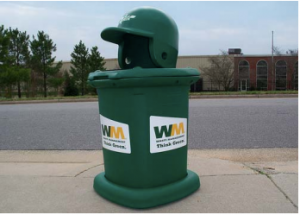
Stadiums and arenas produce tremendous amounts of waste both within and on the outsides of their walls. This waste can come from items brought into the stadium, items bought within the stadium, and tailgates. Managers must take into account all of the possible sources of waste and also be aware of the local waste disposal and recycling policies. To be more sustainable, managers should advertise for sustainability and waste management within the stadium by using techniques to target fans and influence them to join the movement towards more sustainability at the games. An example of an advertising technique that is effective in targeting fans is the use of “Fan Cans,” which are recycling containers with a design on top that represents the sport played in that specific stadium or arena. Currently, there are disposable materials used at concession stands in stadiums that are not easily recyclable, such as low-grade plastics and polystyrene. Stadium managers should work to form partnerships with companies more dedicated to selling recyclable materials to sell their food at concession stands. If stadiums and arenas can all make these changes towards more sustainable practices, the sports industry can thrive while influencing fans to live more sustainable lives and making less of a negative impact on the environment.[1]

Sources:

[1]https://www.wm.com/sustainability-services/documents/insights/Stadiums%20and%20Arenas%20Insight.pdf

2https://new.usgbc.org/leed


-Danni Vines

Indoor Air Quality

Consider this: according to the Environmental Protection Agency, the “air quality within homes can be more polluted than the outdoor air” (Environmental Protection Agency, 2016). This is a scary thought—isn’t it?

Now consider this: You are scrolling through Instagram, Twitter, Facebook, or a Snapchat story and see the typical artsy pictures of apartment window-sills full of decorative succulents, dorm rooms with leafy green plants, and that one hipster girl from high school’s air plants. You think to yourself: Why are houseplants so cool now? Should I go to Trader Joe’s and pick up a succulent? Will this make me hipster and ‘cool’?

An example of “Instagram-worthy” houseplants. Source: @martinathornhill

First, I would like to tell you that you are hipster and cool just the way you are, and you do not need to look like an Instagram model to be loved and valued😊

Second, I would tell you that the two things I asked you to consider (air quality and plants) are, in fact, related.

Crazy, right? Indoor pollutants exist, and they come from many sources. Combustion pollutants, such as particles from water heaters, dryers, space heaters, etc., include carbon monoxide and nitrogen dioxide (which are both colorless and odorless) (Environmental Protection Agency, 2016). Volatile Organic Compounds are released from solids and liquids, such as certain paints and varnishes, glues, air fresheners, cleaning supplies, and cosmetics. These include formaldehyde, acetone, benzene, and more (Environmental Protection Agency, 2016).

These pollutants, which are likely floating around your home/apartment, probably sound alarming and, honestly, they should. These pollutants are associated with negative health outcomes, such as respiratory infection, damaged lung tissue, lung diseases (such as emphysema) and cancer. However, there are many things that can be done to reduce your exposure.

You can:

-open your windows as much as possible

-change filters in your home, air conditioner, and vacuum regularly

-avoid synthetic air-fresheners and petroleum-based wax candles

-use a HEPA (High Efficiency Particulate Air) air-purifier

-choose your paint wisely (use low or no VOC paint)

-use non-toxic cleaners

-get lots of green plants!!!

(Apartment Therapy, 2010).

Plants? Yes! We are coming full circle! This brings me to the third thing I would tell you– yes, you should probably go to Trader Joe’s and buy a plant! But you will be doing so not to conform to society’s standards of what is cool, you will be doing it to clean your air and to improve your health.

According to NASA, these are some of the best plants you can buy to reduce VOCs and improve the air quality of your abode:

  • Bamboo Palm
  • Chinese Evergreen
  • English Ivy
  • Mother-in-Law’s Tongue
  • Florist’s Chrysanthemum
  • Red-Edged Dracaena
  • Weeping Fig
  • Peace Lily (caution, this is poisonous for your furry friends!)

NASA recommends that you have one plant per 100 square feet. (NASA, 1989).

Thus, while indoor pollutants are a scary reality that all of us face, there are easy (and often fun) ways that we can reduce the hazard, including owning plants. You can now take artsy pictures to put on Instagram, all the while cleaning your air and improving your living space! A win-win situation! Additionally, I have included some recipes for green cleaning products that are easy to make, cheap, good for the environment, and good for your health because they do not emit VOCs! There is no reason not to make these!


All-Purpose Cleaner:

Equal parts vinegar and water

*essential oils can be added to change the scent*


Glass Cleaner:

¼ Cup of white vinegar

1 Tablespoon of cornstarch

2 Cups of Warm water


Homemade Wood Polishing Spray

¾ Cup of olive oil

¼ Cup of white vinegar

30 drops essential oil (such as lemon, orange, or lavender)

(Keeper of the Home, 2017).


Good luck, friends, and happy planting, mixing, and being green! Your body will thank you for the improved indoor air quality!


-Catherine Lippert

Teaching Children Sustainability

In order to build a sustainable world, the natural first step is to cultivate a love for the environment and caring for it at a young age. Though children get educated on simple scientific principles—ecosystems, the water cycle, properties of matter—they don’t really seem to be receiving encouragement to take care of the earth. If we start teaching kids as young as elementary school how to be sustainable, there’ll be a generation of children eager to learn about sustainability and ready to tackle the massive ecological issues we’re currently facing.

Children mimic adults all the time—it’s why we have to watch our language around them and make sure they don’t watch violent movies. But a great way to encourage children to live sustainably is by making sure we as adults are practicing environmentally-safe actions. Using reusable grocery bags when shopping with a child, having a compost bin at home, and gardening are all simple ways of making sure a child is able to witness sustainability in action. It can also open up for some great conversations about why sustainable actions are good for the earth and why the earth needs us to be more mindful.

There are tons of lesson plans available for teachers to use when discussing the environment. Small children are the best scientists—they want to know as much as they can and ask questions that would blow your mind. Lessons such as calculating a carbon footprint or learning how we could use solar/wind power to fuel our world could be very beneficial to getting kids thinking about these broad subjects while they’re still eager to learn.

Schools can start community gardens to help get the children outside and working towards sustainable eating practices. Plus, children get very excited over being able to say that they grew something themselves!

There are so many cool ways to reach children to teach them how to live sustainably. Not only are we not teaching kids, we’re barely encouraging students at higher levels of education or adults. Sustainability does not have to be onerous, but currently we make it so inaccessible within the education system. It can be easy and exciting, but only if adults and educators are willing to put forth the education to make it easy and exciting.


-Cammi Stilwell

The wolf was not always the star of Yellowstone National Park

In the 1870s, the expansion of America into the west forced predatory animals into constrained territories, where prey was driven out and domesticated agricultural animals were used as replacement. During the late 1800s and early 1900s, wolves were consistently in the aim of the rifle, trapped, or even poisoned in Yellowstone, so that the so called more regal animals could thrive, like Elk (Route 2016, 1) . From 1914 to 1926, an estimated 136 wolves were slaughtered in Yellowstone Park. In 1926, what was believed to be the last of the Yellowstone wolf packs was executed by bullet without fanfare. Gray wolves had been exterminate throughout the states, retaining only a foot hold in Minnesota by 1960. By 1975, shortly after the wolf was listed under the Endangered Species Act, there begins to be inklings of a new program to reinstate the wolf to its former glory in the west.

By 1995, the wolves were back with the support of the public behind them. Wolves were captured in Canada and brought down to both Idaho and Yellowstone. The wolves they relocated ranged from as young as nine months to full adults of five years of age that had previously bred. The reinstatement of wolves was judged a success by 1996, leading to an increase in biodiversity within the park. The wolves provide far more balance between predator and prey populations within the park. Wolf kills provide food for grizzlies, scavenging animals, as well as coyotes, increasing their populations as well. Although, the future of the wolf depends on their depletion of livestock as well as the hunting habits of packs wandering outside of the park, not just their benefits.

The recovery of the wolf is far from over, however. More pockets of wolf packs must be established in order to ensure genetic sustainability within the species. Sadly, the wolf still only survives in 10% of its former range, while still facing consistent war from farmers. And while the wolf may find sanctuary in Yellowstone, beyond its barriers in Montana and Idaho, hunting and trapping season for wolves exists. Idaho and Montana delisted wolves in the year 2008, while Wyoming has continually come on and off delisting wolves. Still, the US Fish and Wildlife service continues to monitor the recovery path of wolves within these states to confirm an increase in their population. And in 2013, the Obama administration proposed to strip wolves of their protection within the states, however the courts argued otherwise, stating that it would be direct violation of the Endangered Species Act.

The Yellowstone Wolf Project continues to gather information about the packs within the park using radio collars. This information will both ensure their survival and permit the spread of information and learning about this beautiful animal of the west.

The population of wolves now stands around 100 wolves, with about 500 in the subsequent areas surrounding Yellowstone park. They have hit a plateau as of 2014, falling beneath the 174 population in 2010 by 70 wolves. This is due to the limited number of elk, which subsequently leads to fewer numbers of wolves.

We must continue to preserve this animal and promote their recovery. They are complex and beautiful, a definite symbol of the American west.

Camiell Foulger


“.” America’s Gray Wolves: A Long Road to Recovery, Center for Biological Diversity, www.biologicaldiversity.org/campaigns/gray_wolves/.


Staff. “Gray Wolves Create Balance between Predator and Prey in Yellowstone.” My Yellowstone Park, National Park Trips Media, 21 June 2015, www.yellowstonepark.com/things-to-do/wolves-elk-balance.


Route, Bill. “Wolf Conservation in America’s National Parks.” Northland College, Northland College, 15 Oct. 2016, www.northland.edu/news/wolf-conservation-americas-national-parks/.


“Wolf Restoration.” National Parks Service, U.S. Department of the Interior, www.nps.gov/yell/learn/nature/wolf-restoration.htm.


“Wolf Conservation in America’s National Parks.” The History of Wolves in Yellowstone, Yellowstone Wolf: Project Citizen Science, www.yellowstonewolf.org/yellowstone_wolf_history.php.

Checkmate: The Lessons From Chess and Sustainability

When you look at a game of chess, you might just see a board with pieces moving in every direction until somebody wins. To me, I see the chess board as a projection of our lives. Every move that is made on the board shows your personality and creative motives as you try to beat your opponent into submission. Depending on your personality, some players tend to play an open, aggressive style of chess where risks are taken in order to give yourself an advantage. Other players tend to play slowly; patiently waiting for his/her opponent to make a mistake. Just as you play on the chess board, the values you have gained from past experiences define your overall view of sustainability.

For instance, the chess openings I play tend to be slower, more strategic, and safer because I feel more comfortable in pouncing on my opponent’s mistakes instead of causing my own. This same strategy applies to my views on sustainability. For example, I enjoy understanding US policy decisions and how they affect Americans in the long-term. Reviewing policy decisions such as the US withdrawal from the Paris Accords allows me to connect my understanding of sustainability and realize that policy decisions like these do not help the United States. For example, it is estimated from 2020 to 2039 that “between $4 billion and $6 billion [would be spent] in annual coastal property damages from sea level rise and more frequent and intense storms” (“Climate Change: Information on Potential Economic Effects Could Help Guide Federal Efforts to Reduce Fiscal Exposure”, 2017). Being strategic in decision-making not only helps on the chess board, but also saves people’s lives.

Strategic thinking is important for decision making, and your understanding of systems plays an important role in decisions. For instance, the World Chess Champion Magnus Carlsen once said, “I am trying to beat the guy sitting across from me and trying to choose the moves that are most unpleasant for him and his style” (Markushin, 2013). What Carlsen excels at is his understanding of the weaknesses in his opponent. Just as in sustainability, it is necessary to recognize the flaws of the systems we create. Sustainability scientists constantly consider many different systems that are interacting with each other on different scales. However, one important thing that helps in understanding these interactions are the values of those who dictate how the system works. It is important to find these areas of interaction, known to be leverage points, “where a small shift in one thing can produce big changes in everything” (Meadows, 1999). In chess, it is important to find the right move at the right time because it can lead to a chain reaction of positive effects for the rest of the game. The same idea holds true for sustainability to connect it.

Chess presents a unique opportunity for people to make mistakes and learn from them. Those in the field of sustainability have the challenge of finding the best continuation for society, so it is best to be strategic in our decision-making or we may soon be checkmated.

Austin Powell


Climate Change: Information on Potential Economic Effects Could Help Guide Federal Efforts to Reduce Fiscal Exposure. (2017). Gao.gov. Retrieved 26 January 2018, from https://www.gao.gov/products/GAO-17-720


Markushin, Y. (2013). 27 Great Chess Quotes from Magnus Carlsen. Thechessworld.com. Retrieved 26 January 2018, from https://thechessworld.com/articles/general-information/27-great-chess-quotes-from-magnus-carlsen/


Meadows, D. (1999). Leverage Points: Places to Intervene in a System. The Academy for Systems Change. Retrieved 26 January 2018, from http://donellameadows.org/archives/leverage-points-places-to-intervene-in-a-system/

An Activists’ Journey

An activist is defined as: a person who campaigns to bring about political or social change.

My passions lie within the realm of environmental issues. I am taking a class called, Environment & Society this semester and my favorite lecture thus far has been on environmental justice and social activism. It has been a movement that arose out of a spearhead of groups in the 70s and is still going on today. It is sad to see individuals so blind about environmental issues going on in our world every single day. Our job is to speak up and not turn back. All we can do is change our habits in hopes that by electing politicians that support our causes, justice will be served.

Climate change isn’t stopping for anyone, so we need to start being activists in order to break through with radical change.

On January 20th, I attended the Women’s March in Greenville, SC. The sun shined on a group on us Greenbelters (a group of environmental living and learning community members) from Furman University as we sang songs, and yelled at the top of our lungs for the powerful community speeches along with the crowd of thousands in attendance. Showing up is all we had to do, and showing up is all you have to do make a change.

The Women’s March was founded a year ago as a reaction to Donald Trump being elected into the White House in 2016. But most importantly the motive behind it all was to have women raise their voices and come together as a collective body to fight for equality in our country. Guess who started this movement? An activist.

I have been to my fair share of protests, activism meetings, and corner street rallies, thanks to my parents that thrived in the 70s.

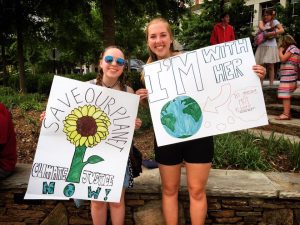
However, last year was my first year going to a protest without my parents, and that was to the People’s Climate March in downtown Greenville. I rounded up a friend who is now living with me in the eco-cabins and has continually supported me on my activist journey. We made posters that read, “It’s getting HOT in here…” and “Save Our Planet…Climate Justice NOW!”

For the Women’s March, we got those same permanent markers out and drew up a sign that read, “They tried to bury us but they didn’t know we were seeds.” An activist is like a seed spreading their passion for a particular issue out into the community. By showing up and supporting a designated cause you are given a voice. By educating yourself with your cause you are becoming empowered. By sharing your stories and passion you are making an impact. Now all you need to do is don’t stop and live it out.

As I held my sign up high and proud at the March, I realized that was exactly where I needed to be. Yes, I am a college student and have plenty of other obligations and work to attend to, but where I was, was where I was meant to be.

Our lives are surrounded by a general motive to find our purpose in this world. Most people think they find this through getting an education, or finding a job they love, but at this stage in my life I have found my purpose in activism. Not a sideline or background activist, but an activist that despite it all will show up. Will you show up?

-Amie Newsome


Bibliography:

Mazzio, Jenna. “So You Want to Be an Activist? 8 Ways to Get Involved in Causes You Care About.” One Green Planet, 19 July 2014, www.onegreenplanet.org/animalsandnature/how-to-get-involved-in-causes-you-care-about/.


Is Christmas Sustainable?

For the first time in decades, the United States is on the precipice of a Christmas tree shortage threatening to shatter the family tradition of picking out the perfect tree to spread holiday cheer. It turns out that the Great Recession from the early 2000’s caused a drastic drop in demand for Christmas trees. The old Druid tradition of dragging a live tree into a house is still a tradition in a modern times. Tree farmers plant new trees to replace their harvest each year. So, when consumers allocated their limited resources elsewhere, tree farmers could not plant the new crop to sell in the 13 to 14 year growing cycle.

Limited land, desired tree height, disease and drought all can have negative impacts on Christmas tree farmers. Consumers only desire a certain size that will fit in their house. Pines larger than six feet, and pines shorter than 4 feet are not desirable. The pines planted in the years before are too tall for most consumers. Conversely, the pines planted later are too short in stature. So in 2017, the repercussions of the recession are still being felt in a manner that probably wasn’t anticipated. A lot of consumers are considering buying artificial trees.

There are even some artificial tree manufacturers marketing their product as more sustainable than cutting down a perfectly healthy pine tree. What about the materials that go into producing the artificial tree? What is their composition? From where are they sourced? What are the transportation costs? How about fuel consumption and exhaust fumes? So, is the carbon footprint of an artificial tree larger than that of a real pine tree being harvested?

Farmers’ Markets all across the nation have seen a resurgence of popularity through farm to table initiatives. Will the same movement happen with local Christmas tree farmers?

-Sonia Clemens

Sustainapalooza

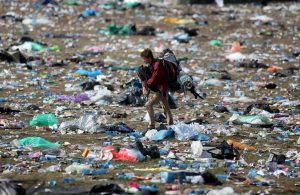
Music festivals are a time to embrace new perspectives, connect with diverse groups of people, and enjoy great music but should this fun come at the cost of the earth? After attending Summer Set Music Festival this summer, I was astounded by the amount of waste left over. By the fourth day of the festival, a once pristine, beautiful campground was riddled with piles of crushed water bottles, left behind tents, and cigarette butts.

Although many festival goers are lovers of the environment, many become caught up in the hype oblivious to the waste they are creating. Music festivals produce on average 6 pounds of waste per person (Creative Carbon Scotland Music). That’s almost twice the national average! For a music festival such as Bonnaroo or Lallapalooza with over 60,000 people over 720 tons of waste is produced not including the fuel for stages and shuttles or the waste produced by vendors themselves. Typically once people enter the campsite there is no leaving, so the music venues must take action in advance to provide sustainable options and inform people of how they can prepare.
Here are a few options music festival venues could employ to reduce the amount of waste:
1. Provide campers with a green guide after buying tickets to help them pack sustainably with reusable bags or water bottles
2. Have water stations available so that campers may refill their water bottles or packs
3. Give each car entering the campsite a recycling bag which they can drop off after the festival to be properly disposed of
4. Offer free t-shirts, rides, or reusable water bottle for bringing in empty plastic water bottles or used cigarette butts. Currently Coachella offers a free reusable water bottle for every ten empty plastic water bottles campers recycle.
5. Have a bike parking lot to encourage festival goers to not use the shuttles
6. Make sure charity boxes are available at the end of the festival for unwanted items like tents.
7. Require food vendors to use recyclable plates, utensils, and cups


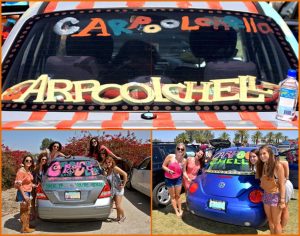
As a camper you can even reduce waste before you enter the festival by carpooling to the grounds with three or more people in order to reduce fuel usage. Carpoolchella is an app where Cochella festival goers who ride with four or more in a car can be entered into a raffle to win prizes!

Have a fun, hippie, and sustainable music festival!

-Kelsey DiMarco

References:

https://www.google.com/amp/s/amp.mindbodygreen.com/articles/can-a-music-festival-be-100-percent-sustainable-7-creative-ways-festivals-are-getting-close

Connecting arts and sustainability

http://www.conservationvalue.org